
What Body Composition Really Means
January 2026
Understanding the Fundamentals
Body composition refers to the breakdown of total body mass into different tissue types. Rather than seeing your body as simply a weight on a scale, composition science helps us understand what that mass actually consists of.
Your body is made up of several tissue types working together: muscle tissue (including skeletal muscle, cardiac muscle, and smooth muscle), adipose tissue (fat cells), bone, organs, water, and connective tissues. Each plays important roles in how your body functions.
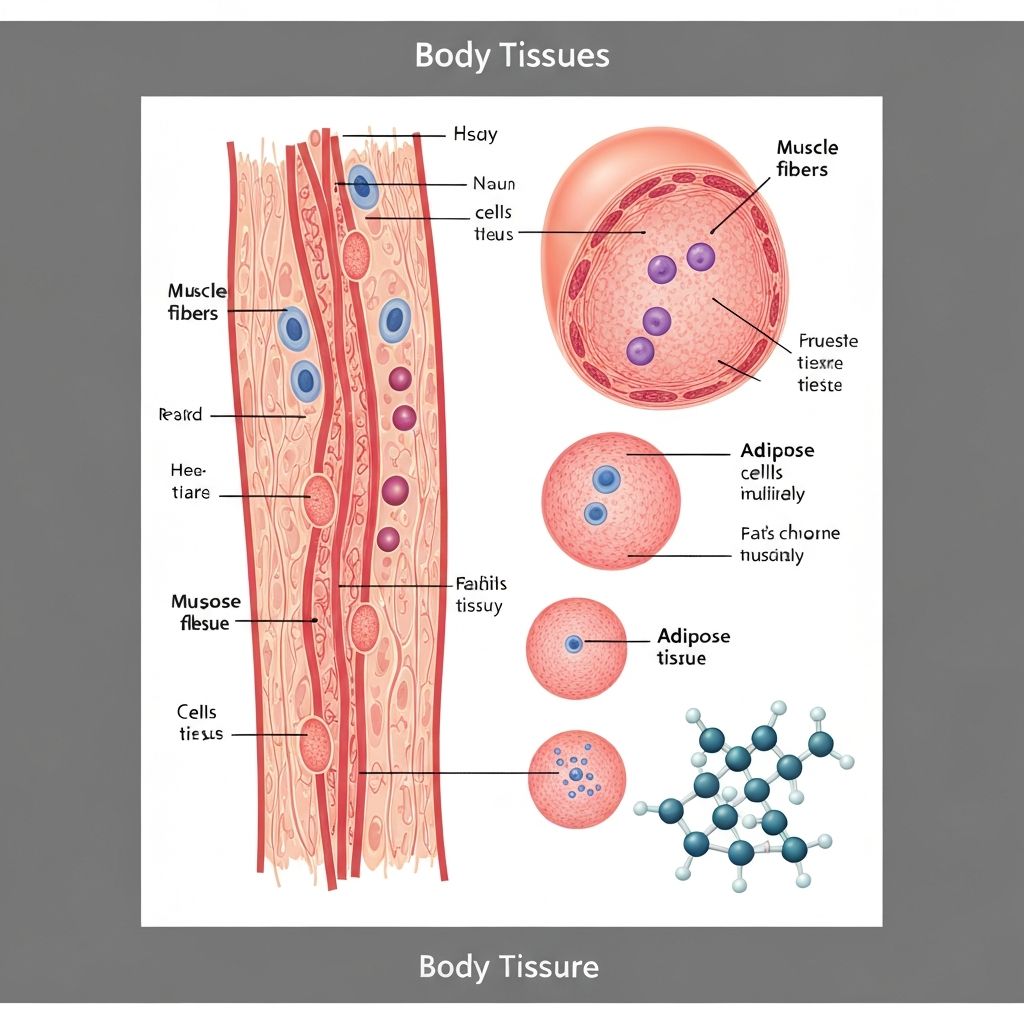
Key Tissue Types
Muscle Tissue
Muscle tissue is metabolically active and plays roles in movement, posture, and metabolism. There are three types: skeletal muscle (voluntary movement), cardiac muscle (heart function), and smooth muscle (internal organ function). Skeletal muscle is what people typically refer to when discussing "muscle mass."
Adipose Tissue (Fat)
Fat tissue stores energy and produces hormones. It insulates your body and cushions organs. Fat is not simply "extra weight"—it's a metabolically active tissue with important physiological functions. Body fat percentages vary widely among individuals.
Bone
Bone provides structure, protects organs, and is involved in mineral storage and blood cell production. Bone density and mass change throughout life based on activity, nutrition, and age.
Water
Your body is largely water—essential for every cellular process. Water content affects weight and varies based on hydration status, hormonal cycles, and sodium intake.
Body Composition vs. Weight
Why the Distinction Matters
Weight is a single measurement of total mass. Body composition tells you what that mass consists of. This distinction is important because two people of identical height and weight can have very different compositions.
Muscle tissue is denser than fat tissue. A person with more muscle may weigh the same or more than someone with less muscle, despite potentially looking different or having different health markers.
Additionally, weight fluctuates daily due to factors unrelated to composition changes: hydration status, food intake timing, hormonal cycles, sodium consumption, and digestive transit time. Composition, by contrast, changes more gradually based on activity, nutrition, and time.

Individual Variation
Body composition varies significantly among individuals based on genetics, age, sex, activity history, and nutrition. There is enormous natural variation in healthy human bodies.
The science of body composition is descriptive—it describes what tissues your body consists of and how they function. It is not prescriptive—it does not dictate what your composition "should" be. All body types are valid.
What Affects Body Composition?
Contributing Factors
- Genetics: Natural variation in muscle-building capacity, fat distribution, and metabolism
- Age: Muscle mass naturally declines with age; bone density changes
- Sex: Biological differences affect muscle capacity and fat distribution
- Activity level: Physical activity influences muscle mass and tissue maintenance
- Nutrition: Protein intake, overall calories, and nutrient variety affect tissue maintenance
- Sleep and recovery: Essential for tissue maintenance and hormonal regulation
- Hydration: Supports all physiological processes
- Hormonal factors: Influence muscle maintenance, fat storage, and metabolism
These factors interact in complex ways. Body composition changes gradually in response to sustained changes in activity, nutrition, and lifestyle.
Why Composition Science Matters
Understanding body composition helps you appreciate how your body works. It provides perspective beyond simple weight measurements. It helps you evaluate health and wellness from a more nuanced perspective, understanding that bodies are complex systems with many interrelated functions.
Composition science is also an antidote to oversimplification. It shows that bodies don't fit neatly into categories and that individual variation is normal and natural. Understanding this science helps you think critically about health claims and appreciate the diversity of human bodies.

Continue Your Learning
Explore more articles about body composition and nutrition science.
View All ArticlesEducational content only. No medical services. No promises of outcomes.
This article provides informational content about body composition science. It is not a substitute for professional medical advice. Individual circumstances vary. For personalized guidance related to health concerns, please consult with a qualified healthcare professional.